



Google Ads is changing how certain target-based bidding strategies behave when campaigns are limited by budget.
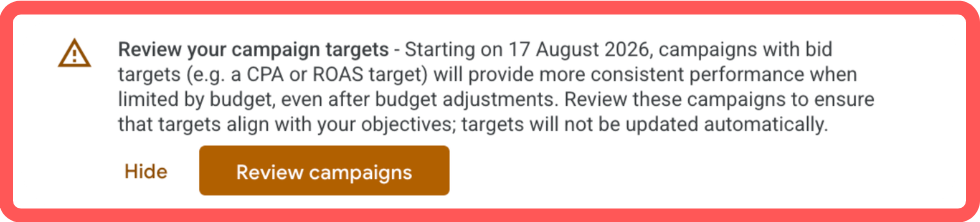
From 17 August 2026, affected campaigns using Target CPA, Target ROAS or eligible Target CPC bidding will begin optimising more closely towards the actual targets entered by advertisers. Google says the change is intended to make campaign performance more predictable, particularly when budgets are increased.
However, the announcement has also caused concern across the PPC industry. Some marketers believe the update could reduce the efficiency of campaigns that currently perform considerably better than their stated targets.
At Blaze Media, we stay on top of these industry updates so we can keep our clients’ ad strategy optimised. Here is what is changing, which campaigns could be affected and what advertisers should review before the rollout begins.
What’s Changing with Google Ads Smart Bidding?
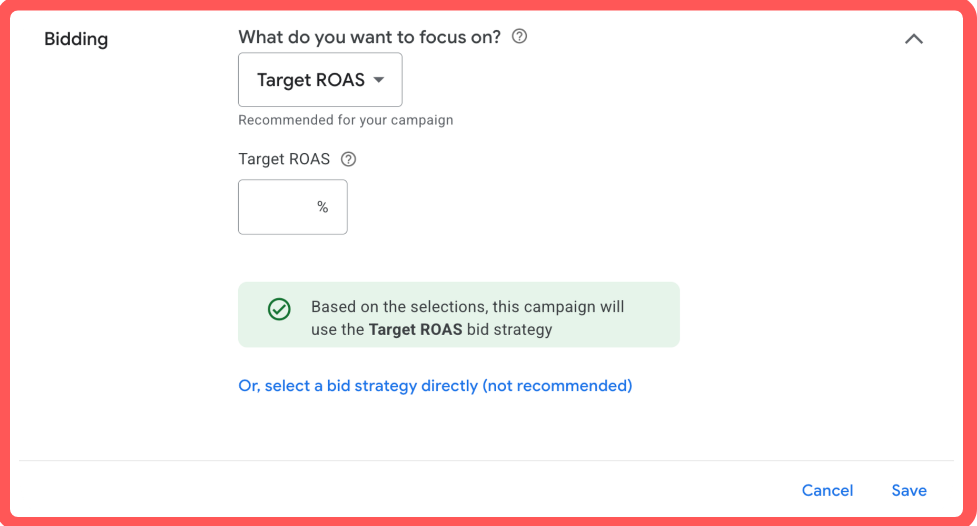
Target CPA and Target ROAS Explained
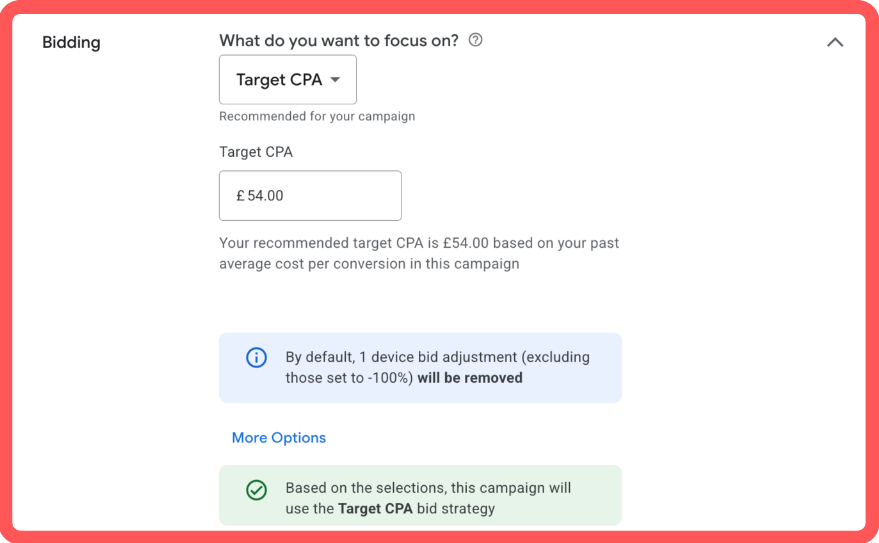
Target CPA sets the average amount an advertiser is willing to pay for a conversion, while Target ROAS tells Google how much conversion value should be generated for every pound spent.
In practice, budget-limited campaigns can currently perform much better than those targets. A campaign could have a Target CPA of £50 while consistently generating conversions for £30. Although the advertiser has told Google that £50 is an acceptable cost, the limited budget may encourage the bidding system to focus on the auctions most likely to produce efficient results.
The same can happen with Target ROAS. A campaign with a 300% target could deliver a 500% return while its budget remains restricted.
The Shift from 17 August
Budget-limited campaigns will start optimising more consistently towards the target actually entered. This means the campaign generating conversions for £30 could become more willing to pay closer to £50, while the campaign achieving a 500% ROAS could begin moving closer to its 300% target.
This does not mean every affected campaign will immediately reach its target. It does mean advertisers should no longer assume that historic overperformance will continue simply because the campaign remains limited by budget.
Which Campaigns Are Affected?
The update applies to budget-limited campaigns using Target CPA or Target ROAS across Search, Shopping, Performance Max, Demand Gen and Travel campaigns. Target CPC is also included for eligible Demand Gen campaigns.
Display and Hotel campaigns already use the updated behaviour, so advertisers should not expect a new change to those campaign types in August.
App campaigns, Video reach campaigns and Video view campaigns are not included. Campaigns using Manual CPC or Target Impression Share are also outside the main scope of the update.
The campaigns most likely to experience a noticeable change are those that are regularly limited by budget and consistently perform better than the targets entered into Google Ads. A campaign already delivering close to its Target CPA or Target ROAS may see little difference.
Why Is Google Making This Change?
Google says the update is designed to improve predictability. Under the current system, a budget-limited campaign can perform considerably better than its target while spend remains restricted. However, performance may change sharply when an advertiser increases the budget and allows the campaign to enter more auctions.
For example, a campaign achieving a £30 CPA against a £50 target may not continue delivering a £30 CPA after its budget is doubled. The additional spend allows Google to pursue a wider range of opportunities, but some of these auctions will be less likely to convert efficiently, which can inflate the campaign’s average CPA.
Google wants budgets and bidding targets to play more clearly defined roles: the budget should determine how much the campaign is allowed to spend, while the target should determine the level of efficiency it works towards.
Google has also confirmed that the rollout will not automatically change campaign budgets or bidding targets. Advertisers remain responsible for deciding whether the figures in their accounts still reflect their commercial objectives.
Why Has the Update Become Controversial?
The announcement has caused debate because some advertisers have deliberately used budget limits alongside less restrictive bidding targets, for example setting a £50 Target CPA to give Smart Bidding more flexibility while using the daily budget to control total spend.
Some PPC professionals are concerned that the new behaviour could remove this efficiency advantage. Rather than continuing to find the lowest-cost conversions available, the system may become more willing to bid aggressively until actual performance moves closer to the stated target.
Critics have questioned why an automated bidding system should stop pursuing more efficient results simply because an advertiser has entered a higher acceptable CPA. Others argue that a target should mean what it says: if a business genuinely needs to generate conversions for £30, that figure should be reflected in the campaign settings rather than relying on a limited budget to maintain performance.
The disagreement comes down to two priorities: achieving the strongest possible efficiency or creating more predictable performance when campaigns scale. Google is prioritising predictability.
There has also been speculation that the update could affect all Target CPA and Target ROAS campaigns, not only those limited by budget. Google Ads Liaison Ginny Marvin has denied that a broader Smart Bidding change is taking place. Google’s position is that campaigns without budget constraints already optimise towards their stated targets in this way, and the August rollout is intended to bring budget-limited campaigns into line with that existing behaviour.
Could Cost per Acquisition Increase?
Cost per acquisition could increase where there is a significant gap between the target and actual performance. If a campaign has a £40 Target CPA but consistently generates conversions for £20, performance moving fully towards the stated target would effectively double the cost per acquisition.
The impact will depend on factors including the size of the gap between target and actual performance, available demand, competition, conversion volume, seasonality and the quality of the campaign’s conversion data.
A higher CPA may also be accompanied by additional conversion volume. That is not automatically a negative outcome if those extra conversions remain profitable and maintain the same level of quality. Equally, more conversions are not valuable if lead quality declines or the additional sales fail to generate enough profit. Advertisers should therefore assess the update using genuine business outcomes rather than looking at CPA or ROAS in isolation.
What Should Advertisers Review Before 17 August?
Identify Affected Campaigns
Identify campaigns using Target CPA, Target ROAS or eligible Target CPC bidding and determine which are currently, or regularly, limited by budget. Advertisers should not rely solely on the status shown in the account on a single day, as campaigns can move in and out of budget limitation depending on demand, seasonality and recent spending patterns.
Compare Targets Against Actual Performance
Compare the bidding target with actual performance over a meaningful reporting period. Where there is a clear gap, that does not automatically mean the target should be changed to match recent performance. A campaign achieving a low CPA with a restricted budget may not be able to maintain that cost while generating more volume, so tightening the target too aggressively could restrict delivery and reduce conversion volume.
A middle-ground target may make more sense, reflecting what the business can genuinely afford while still giving the campaign enough flexibility to access profitable opportunities.
For lead generation campaigns, this means considering lead quality, close rates, customer value and profit margins. For ecommerce campaigns, Target ROAS should account for product margins, returns, discounts, fulfilment costs and repeat purchases.
Review Conversion Tracking
Smart Bidding can only optimise towards the data it receives. If Google Ads is treating button clicks, page views or partially completed forms as important conversions, the system may prioritise actions that create little commercial value.
Where possible, qualified lead data, completed sales and offline revenue should be imported into Google Ads. This gives the bidding system stronger information about which conversions actually matter.
Should You Increase Your Campaign Budget?
Increasing the budget may remove the Limited by budget status, but advertisers should not spend more simply to avoid the update. Additional budget only makes sense when there is enough profitable demand and the business can support the extra volume.
A campaign may appear highly efficient because it is only reaching the users most likely to convert. Increasing the budget can open the campaign to less certain opportunities, which may increase CPA or reduce ROAS. The decision should be based on commercial performance, not Google’s recommendation alone.
How Should Performance Be Monitored After the Rollout?
Google says the update will begin on 17 August and roll out over several weeks, so advertisers should not expect every campaign to change at exactly the same time.
Before the rollout, record a clear performance benchmark covering actual CPA or ROAS, target CPA or ROAS, spend, conversions, conversion value, conversion rate and lead or customer quality.
After the change begins, the main question is whether actual performance starts moving closer to the campaign target. Advertisers should also watch for changes in conversion volume, budget utilisation, cost per click and the quality of leads or sales being generated.
It is important to avoid changing too many settings at once. Adjusting targets, budgets, conversion actions, campaign structure and creative assets at the same time makes it difficult to identify what caused any subsequent movement in performance. Changes should be documented and assessed over a meaningful period, taking conversion delays and normal account fluctuations into consideration.
What the Smart Bidding Change Means for UK Advertisers
The update is not a reason to abandon Target CPA or Target ROAS. The main risk comes from campaigns using targets that no longer reflect what the business actually needs.
A campaign may have quietly outperformed an outdated target for months. From 17 August, Google could begin treating that target as a more direct instruction. Advertisers should therefore review their bidding settings now and ensure every target reflects current margins, customer value, sales capacity and growth objectives.
Prepare Your Google Ads Account with Blaze Media
Google says the Smart Bidding update will make campaign performance more predictable, but that predictability depends on the quality of the targets being given to the system.
If your campaigns are limited by budget and consistently outperforming their Target CPA or Target ROAS, the numbers currently entered into your Google Ads account could become much more important after 17 August.
At Blaze Media, our in-house PPC team reviews bidding strategies, budgets, conversion tracking and commercial performance to assess whether automated campaigns are delivering genuine business value, not simply whether Google is reaching platform targets on your account.
Get in touch with Blaze Media, and we can help you identify affected campaigns, review whether your current targets still make commercial sense and prepare a structured monitoring plan for the August rollout.