



At Blaze, you have probably noticed that we’re quick on the draw when it comes to creating content about big cultural events. Sure, part of that is because our Content Executive has an ungodly amount of screen time, meaning they never miss out on the hot events, but we also make sure we track these events for the benefit of our clients and their content.
Newsjacking is a skill that all marketers should have in their arsenal, especially in today’s digital landscape. At Blaze, we have seen firsthand the impact that newsjacking can have on a business’s marketing strategy.
For anyone on their way to Google what we’re on about, don’t worry, we have you covered. In this guide, we are going to dive into what newsjacking is and how it can take your SEO strategy to the next level.
What is Newsjacking?
Though it may sound like a certain vehicular-related crime, newsjacking is actually a marketing technique that has become increasingly popular in the age of social media marketing.

Newsjacking is basically the act of taking trending news stories and relating them back to your brand. It’s something that has been around for as long as news and marketing have existed in the same world, with one of our favourite examples being Specsavers’ marketing around the famous gold/white/black/blue dress, posting the image with their tagline: ‘should’ve gone to Specsavers’.
Newjacking doesn’t need to be extravagant or max out your marketing budget; it just needs to be well timed and relevant, sparking conversation and building brand awareness.
The SEO Connection: Why News = Search Traffic
So how does this relate back to SEO?
Lesson one: EVERYTHING is connected to SEO.
Well, maybe not everything, but newsjacking certainly is.
Newsjacking is essentially built on a practice that already has high value in SEO, which is creating content that capitalises on sudden spikes in search volume. When you newsjack, you aren’t just making content that’s irrelevant; you’re inserting your expertise in breaking news stories.
If you’ve ever met an SEO expert, you’ve probably heard the acronym E-E-A-T, which stands for experience, expertise, authoritativeness and trustworthiness. E-E-A-T principles help drive traffic to your content by allowing search engines to recognise it as high-authority, improving its visibility and helping it rank higher.
Trending topics also experience an immediate search query, and by publishing content on these topics early on, you can capture traffic from these searches. We like to think that we’re pretty good at this (very humble, we know).
SEO Newsjacking Example: Bridgerton’s Marketing Strategy
Our blog on Bridgerton’s marketing strategy from Netflix is a good, recent newsjacking case study. Season 4 of Bridgerton was not set to come out until January 29th, but as soon as trailers started to amp up, we knew that search spikes would follow, so we released our related blog on the 12th of the same month. In the run up to the release, our blog saw a substantial increase in traffic, and it continues to grow as people wait for part 2. That’s timely newsjacking done right.
Newsjacking SEO Best Practices
Utilising newsjacking is one of our many SEO top tips for small businesses, but it has to be done right to be successful.
If you want to successfully execute a newsjacking strategy, it’s essential to understand the best newsjacking SEO practices, which include:
Match Search Intent
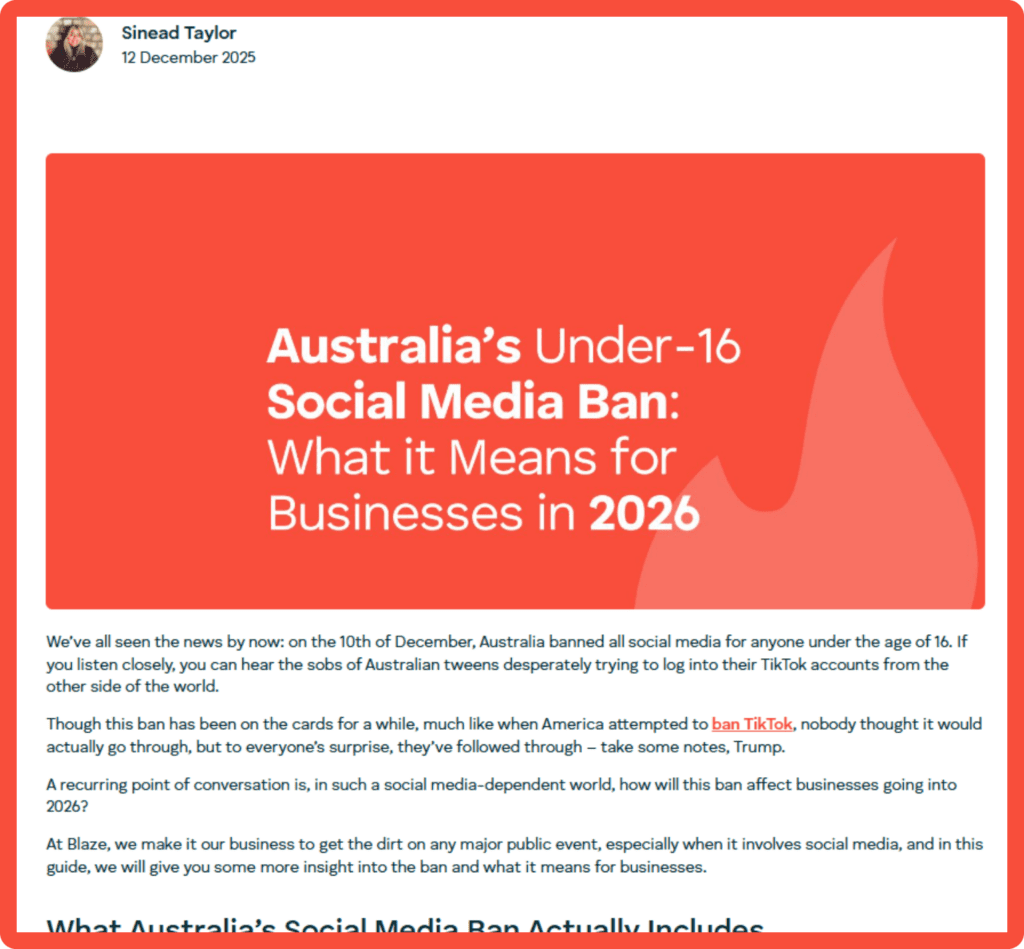
Understanding the search intent behind all the content you make is essential to implementing a great newsjacking strategy. In SEO, search intent can be broken down into: informational, navigational, commercial and transactional.
You could produce fantastic content related to a trending topic, but if you’ve misunderstood your target audience or not considered the search engine results linked to the topic, you’re bound to fail.
For example, say you want to make a blog post surrounding the current Winter Olympics drama. When people are searching the topic, they want the gossip, and they want the information. They don’t want to make a purchase, and so there is no point catering your content to transactional search intent if that’s not what searchers want.
Taking the time to consider the most likely intent during your keyword research phase can make a huge difference and elevate your content from something that gets a few clicks to something that gets serious attention.
Balance Speed with Quality
We’ve already emphasised the importance of acting fast, but you should never prioritise speed over quality. We get it, as marketers we all want to be the first to capture traffic and get content out there, but there’s really no point if your content isn’t quality.
Say you saw a viral moment and quickly whipped up a shoddy graphic and a caption full of errors for your socials, people are going to skip right over that and stop at a higher-value post that not only looks good, but efficiently expresses all of the information.
Don’t be afraid to take your time… just not too much. It’s important that you take the time to understand the information and produce quality content that doesn’t impact your business’s reputation.
Use Compelling Optimised Headlines
Look, if you’re looking to inject your brand into a trending topic, then you’re probably not the only one. Unless, of course, you have a content team on your side making sure you get the scoop before everyone else.
Because many brands will be trying to jump on the news, you have to make sure your content stands out and matches what people are searching for, and optimised headlines are a great way to do this.
Say you want to write a blog about the new hot show, Heated Rivalry, you have to think- what will people want to know about it? This means getting to know the media, learning about shocking moments, and tailoring your headlines to match what people will be searching for.
Good headlines cut through the noise and boost visibility, and knowing how to do this is a skill in itself. That is why we will always recommend working with an experienced SEO team: key aspects of your strategy, such as headlines, are second nature to them.
Add Multimedia
Have you ever read a short article which tells you everything about a viral moment, without showing you the viral moment? Once you’ve already had to fight through a wall of ads and cookie policy pop-ups, not even seeing the moment that everyone’s talking about is enough to make you want to snap your phone.
Multimedia is a great way to draw attention to your content, giving your audience exactly what they clicked to see, while also boosting your SEO. By adding images to a blog you have made about a topic, you give yourself the opportunity to add alt text to your content.

Alt text provides context for your blog (which is crucial in the age of AI crawling), helping search engines better understand and index images and ensuring your content appears in relevant search results.
See, everything really does circle back to SEO.
Update Existing Content
We can’t tell you how many websites we have seen with a graveyard of old, outdated content left to slowly disappear into the ether.
You could delete this content to reduce bounce rates and prevent keyword cannibalisation, but we will always suggest that you look at how to update existing content to maximise on trending content.
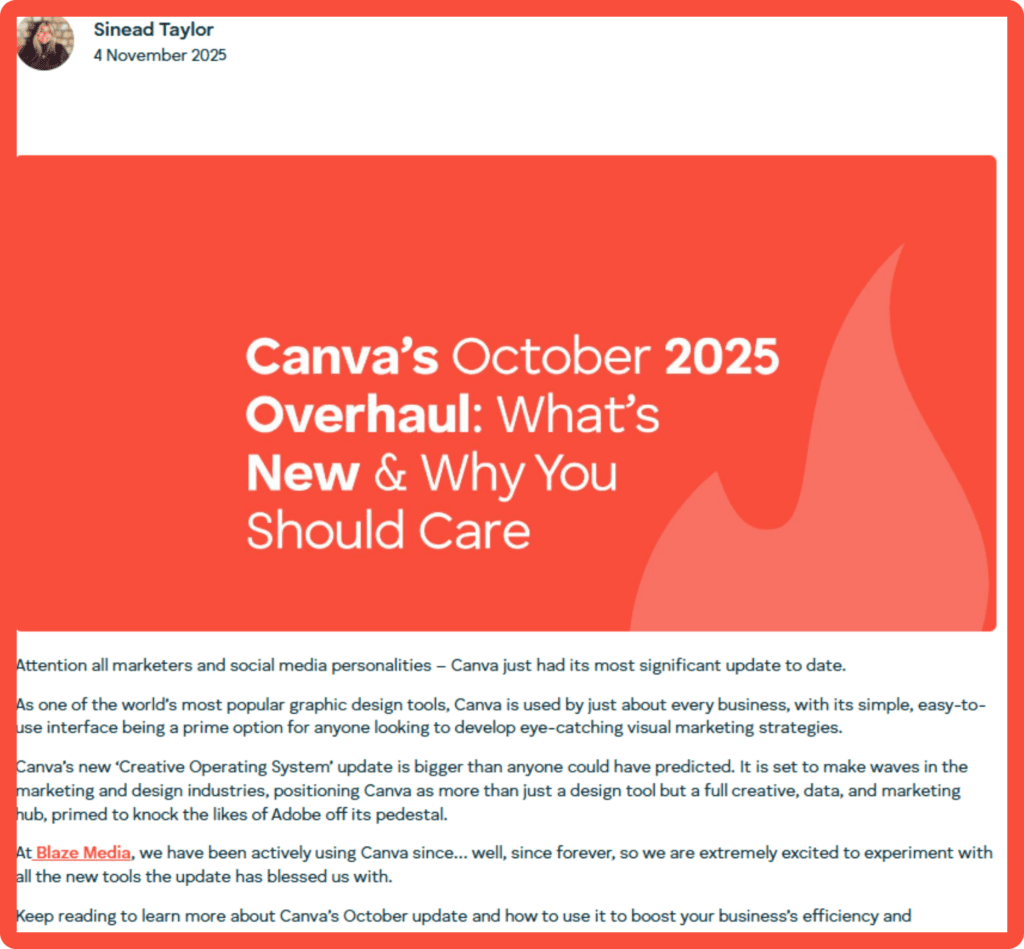
If you take an example of Blaze, we created a high-traffic blog last year about Canva’s latest updates and as updates continue to come out for the software, our plan isn’t to scrap the content, it’s to update it and make sure that you’re including fresh, relevant and high-volume keywords.
Add Internal Links to Relevant Service Pages
There’s little point in making content based on trending topics if you’re going to get no conversions from it. Newsjacking is a great way to bring attention and traffic to your business, but once they’ve seen your business, you don’t want them to just leave.
Make sure you embed clear, relevant links to your services in any content you produce.
As well as making relevant links between your business and trending moments, you need to be able to demonstrate that you offer valuable services which are relevant to the topic.
At Blaze, we didn’t just write a blog about Oasis’s marketing strategy because we’re fans; we did it because we knew we could provide relevant services that those interested in their marketing could benefit from.
Making successful content isn’t just about being one step ahead; you need to be four or five steps ahead to really capitalise on big news.
Common Newsjacking Mistakes That Kill SEO Performance
Newsjacking is a great tool for boosting your SEO performance, but it’s easy to mess up if you don’t approach it correctly. Some common newsjacking mistakes that people make that kill SEO performance include:
Being Too Slow
We get it, you can’t rush perfection- but sometimes you have to if you want the strategy to pay off. Newsjacking is very time sensitive, and if you don’t act fast, it can quickly lose value.
You have to strike while the iron is hot to have the most impact, and a good way to do this is to use tools like Semrush and Google Trends to check whether the topic you want to jump on still has high traffic and search potential.
You can never predict how long a topic will trend, so never put off talking about it.
Forcing Irrelevant Connections
Something that we’ve seen in unsuccessful newsjacking strategies is forced connections that make no sense. For example, say there was a huge trend with a new meat dish that everyone loves, it would make no sense for vegans to jump on the topic because there’s no benefit to them doing so.
When connections are there, it’s a real light bulb moment, but it’s ok that not every trending topic is relevant to your business, and there is much more value in waiting and commenting on trends that actually have relevance and have potential to convert.
Neglecting Basic on-Page SEO in a Rush
Something we’ve seen trip up many newsjacking attempts is throwing the usual SEO best practices out the window in the excitement of moving fast. When a trend hits, it’s tempting to just get something published as quickly as possible, but skipping the basics like optimised title tags, meta descriptions, internal linking, and proper header structure can seriously limit how much visibility that piece ever gets.
The whole point of newsjacking is to ride a wave of traffic, so it makes sense to give that content every possible chance of being found. Taking an extra ten minutes to make sure your on-page SEO is solid before hitting publish is always worth it. Speed matters, but not at the expense of the fundamentals that help your content actually reach the people you’re trying to get in front of.
Measuring Newsjacking SEO Success
If you’re going to play the newsjacking game, you better know whether it’s actually paying off- and that means getting serious about your metrics.
Software such as Google Search Console and Analytics quickly reveal whether you’ve capitalised on an opportunity or missed it completely. Track impressions, click-through rates, and backlinks, because when high-authority sites link to your perspective on a current story, it provides lasting SEO. Conduct ranking checks at 30, 60, and 90 days for your target keywords to assess if your content has genuine staying power, since distinguishing between a lasting success and a fleeting trend is crucial in this field.
Make the Most of Every Cultural Event With Blaze Media
So there you have it, there’s everything you need to know about newsjacking for SEO. As a leading marketing agency in Liverpool, at Blaze, we make it our mission to stay up to date with trending topics, and we like to think we’ve mastered making trending content that boosts our SEO, and we’re ready to help you do the same.
Get in touch to find out how we can help you turn trending moments into conversions.